On 12 December 1988, 35 people lost their lives and 484 were injured when three trains collided on the approaches to Clapham Junction. The subsequent investigation exposed far more than a single signalling fault. It revealed serious weaknesses in the way British Rail installed, tested and supervised safety-critical equipment, and raised fundamental questions about how safety was managed across the organisation.
In November 1989, Anthony Hidden QC published his findings, making 93 recommendations intended to prevent future accidents, improve safety management and reduce the consequences when things went wrong.
But what happened next?
In the concluding episode of our three-part investigation into the Clapham Junction disaster, we examine the legacy of Hidden’s report and the changes that followed.
From signalling installation standards, independent testing and the management of working hours, to Automatic Train Protection, cab radio, rolling-stock crashworthiness and emergency preparedness, we explore how the railway responded to the lessons of Clapham.
We also examine the difficult decisions that followed. Not every recommendation was implemented exactly as proposed, and some of the most ambitious safety improvements faced substantial technical, financial and practical challenges.
Finally, we return to the human consequences of the disaster, the 35 people who never came home, and the responsibility the railway continues to carry.
Nearly four decades later, what does Clapham Junction still have to teach us about railway safety?
The Clapham Junction Trilogy
Part One — The Collision: The events of 12 December 1988, the trains involved, the collision and the extraordinary emergency response.
Part Two — The Investigation: The signalling failure at WF138, the engineering work that introduced it, the safeguards that failed and the organisational weaknesses uncovered by Anthony Hidden QC.
Part Three — The Legacy: Hidden’s recommendations, the improvements that followed and the enduring lessons of one of Britain’s most significant railway disasters.
About Signals to Danger
Signals to Danger is a UK railway history and safety podcast exploring rail accidents, incidents and the investigations that followed them. From historic railway disasters to modern rail safety and current events, each episode looks beyond what happened to understand why it happened, what was learned and how those lessons continue to shape the railway today.
Music Credits
Opening credits: “Epic Motivation” by Aylex — freetouse.com
Closing credits: “A Kind of Hope” by Scott Buckley — http://www.scottbuckley.com.au
“A Kind of Hope” is licensed under Creative Commons Attribution 4.0 International (CC BY 4.0).
Artwork Credits
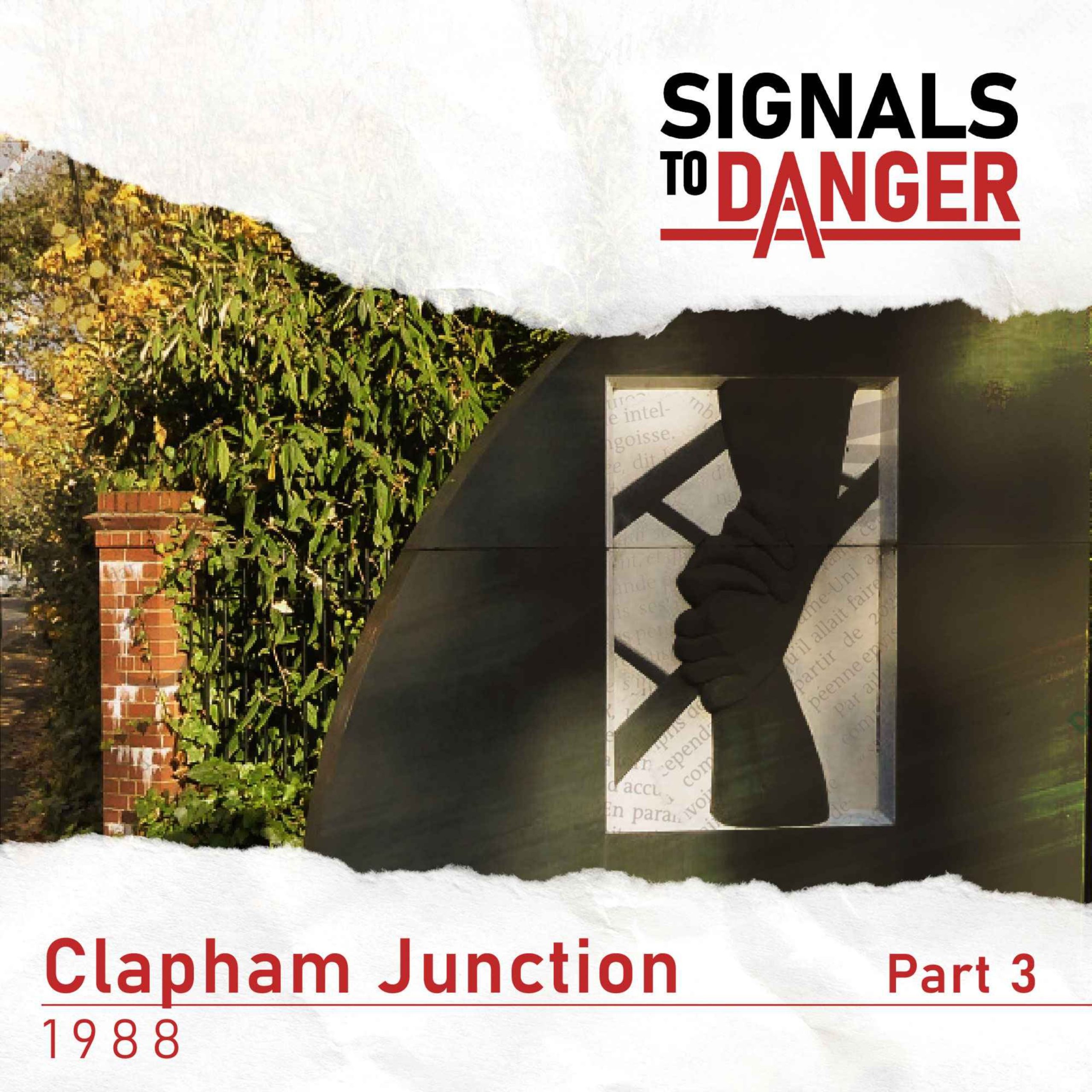
Cover photograph: “Memorial for the Clapham rail crash of 1988” by David Smith, sourced from Geograph Britain and Ireland via Wikimedia Commons.
Original photograph: https://commons.wikimedia.org/wiki/File:Memorial_for_the_Clapham_rail_crash_of_1988_geograph.org.uk-_5198130.jpg
Licensed under Creative Commons Attribution-ShareAlike 2.0 Generic (CC BY-SA 2.0): https://creativecommons.org/licenses/by-sa/2.0/
The original photograph has been cropped, colour-adjusted and incorporated into the Signals to Danger cover design, with additional graphic elements and typography. The finished adapted cover artwork is licensed under Creative Commons Attribution-ShareAlike 2.0 Generic (CC BY-SA 2.0): https://creativecommons.org/licenses/by-sa/2.0/
Listen and Support
Find more episodes and information at https://signalstodanger.com
Follow Signals to Danger on Facebook, TikTok and X (@signalstodanger), or email dan@signalstodanger.com.
Support the podcast and listen ad-free through Patreon.
Thank you for listening, and until the next episode, travel safe.
Hosted on Acast. See acast.com/privacy for more information.
No responses yet