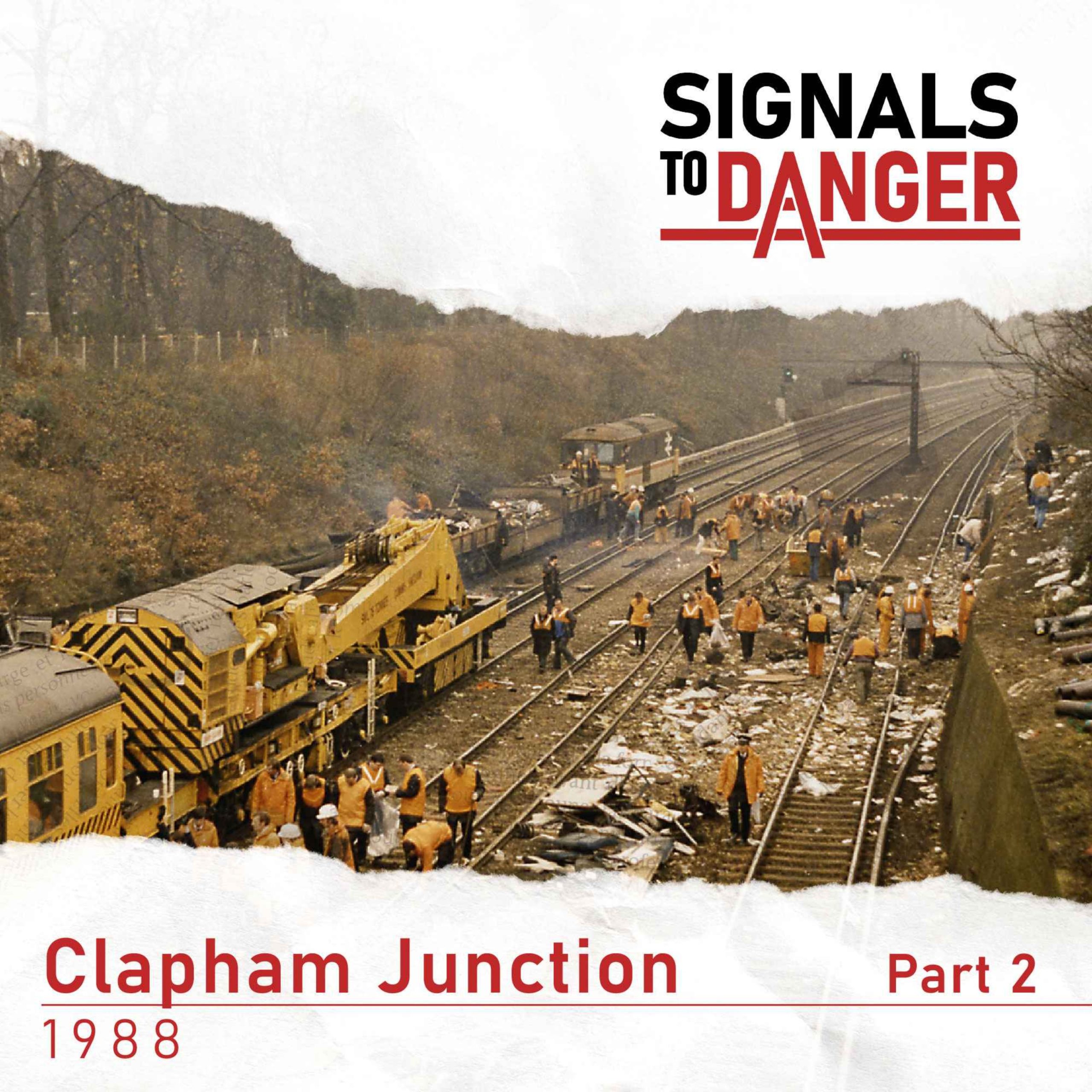
On the morning of 12 December 1988, three trains collided near Clapham Junction in south London. Thirty-five people lost their lives, and hundreds more were injured. The disaster raised a fundamental question about railway safety: how could a signalling system designed to keep trains apart allow one to proceed towards another standing on the same line?
In the second episode of our three-part series, we follow the investigation into the Clapham Junction railway disaster. At the centre of the inquiry was signal WF138, which had displayed dangerously incorrect aspects to approaching Drivers. Investigators would discover how a single redundant wire, left behind during signalling alterations, had created an electrical false feed capable of defeating a vital safety protection.
But identifying the electrical fault was only the beginning. The investigation, led by Anthony Hidden QC, examined the engineering work undertaken as part of the Waterloo Area Resignalling Scheme, the failure to independently check the completed installation, and the shortcomings in supervision and testing which allowed the defect to remain undetected.
As the inquiry progressed, it uncovered evidence of wider organisational weaknesses within British Rail’s Signal and Telecommunications Department. Earlier signalling failures at Oxted and Queenstown Road had already raised concerns about installation and testing practices, yet important lessons had not been effectively implemented. The findings would extend responsibility far beyond one technician, raising profound questions about the management of safety-critical railway engineering.
The Clapham Junction Trilogy
This episode is the second instalment of our three-part examination of the 1988 Clapham Junction railway disaster.
- Part One – The Collision: The events of 12 December 1988, the trains involved, the collision and the extraordinary emergency response.
- Part Two – The Investigation: The signalling failure at WF138, the engineering errors, the investigation led by Anthony Hidden QC and the organisational shortcomings it uncovered.
- Part Three – The Legacy: The recommendations which followed, the changes made to British railway safety and the lasting consequences of the disaster.
About Signals to Danger
Signals to Danger is a UK railway history and safety podcast exploring rail accidents, incidents and the investigations that followed them. From historic railway disasters to modern rail safety and current events, each episode looks beyond what happened to understand why it happened, what was learned and how those lessons continue to shape the railway today.
Music Credits
Opening Credits
Epic Motivation by Aylex
Source: https://freetouse.com/music
Free To Use Music for Video
Additional Music and Closing Credits
Intervention by Scott Buckley
Website: https://www.scottbuckley.com.au
Licensed under Creative Commons Attribution 4.0 International (CC BY 4.0):
https://creativecommons.org/licenses/by/4.0/
Support
Support the podcast and help make future episodes possible through Patreon.
Follow Signals to Danger on social media for railway history, safety explainers and updates on new episodes.
Hosted on Acast. See acast.com/privacy for more information.
No responses yet