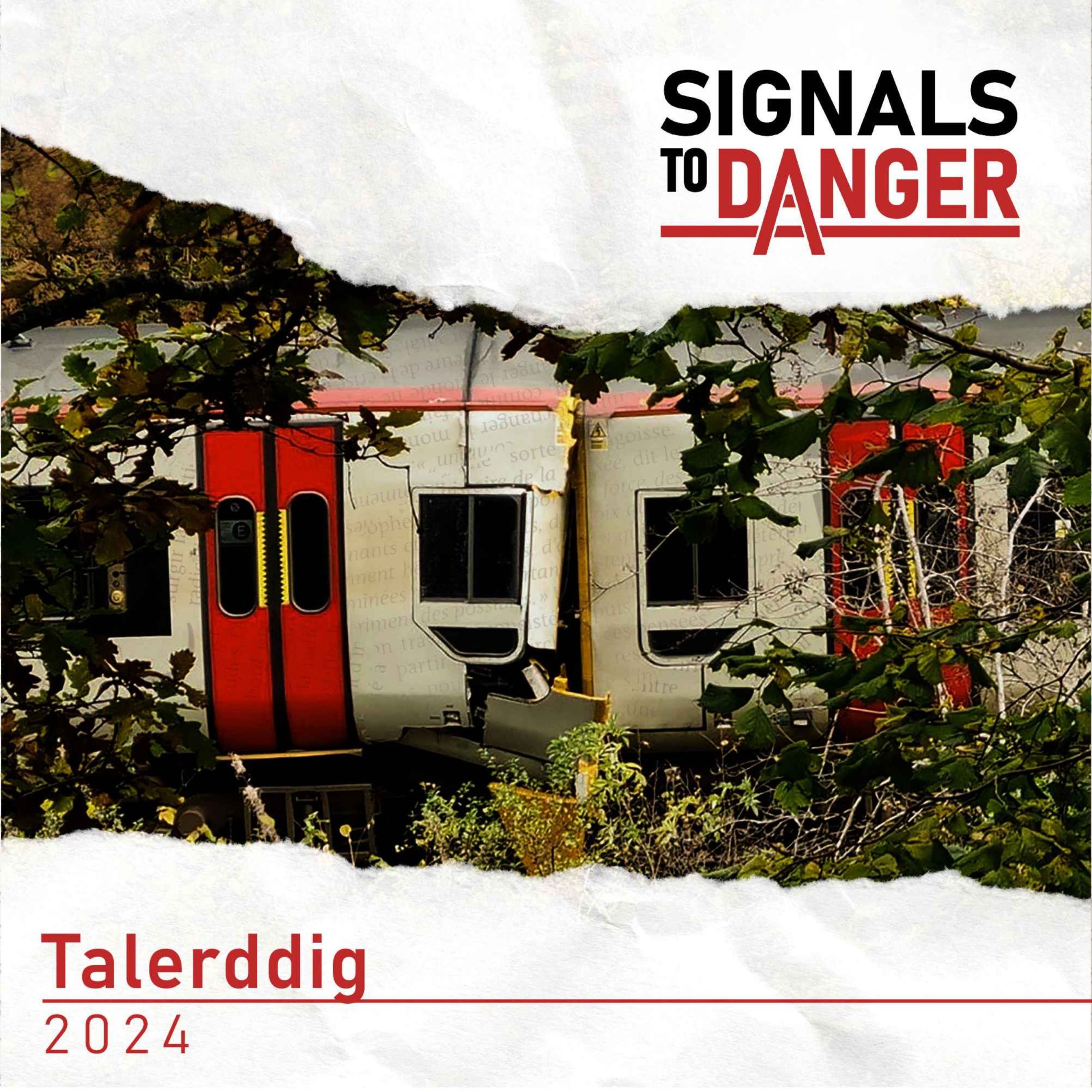
On 21 October 2024, two Transport for Wales trains collided head-on near Talerddig on the Cambrian Line.
It was a route controlled using ETCS — one of the most advanced signalling systems in use on the British railway — yet the accident began with one of the oldest challenges the railway has ever faced: low wheel–rail adhesion.
In this episode of Signals to Danger, we reconstruct the events leading to the collision and examine how train 1J25 came to pass the end of its movement authority and enter the single-line section beyond Talerddig loop.
We look at how ETCS controls trains on the Cambrian Line, what happens when a train is unable to stop where the system expects it to, and how investigators approached the question of why the braking performance seen that evening was so far from normal.
The investigation takes us into wheel–rail adhesion, wheel slide protection, sanding systems, driver decision-making and communication between railway staff, as well as the limits of even highly sophisticated signalling technology when several layers of protection begin to weaken at the same time.
Finally, we examine the findings and recommendations made by the Rail Accident Investigation Branch, and what Talerddig tells us about the relationship between modern railway technology and the physical railway beneath it.
New technology. Old problems.
OPENING CREDITS
Music track: Epic Motivation by Aylex
Source: https://freetouse.com/music
Free To Use Music for Video
END CREDITS
Music track: Saved by Brothers by Aylex
Source: https://freetouse.com/music
Free Background Music for Video
Signals to Danger is a UK railway history and safety podcast exploring rail accidents, incidents and the investigations that followed them. From historic railway disasters to modern rail safety and current events, each episode looks beyond what happened to understand why it happened, what was learned and how those lessons continue to shape the railway today.
Hosted on Acast. See acast.com/privacy for more information.
No responses yet